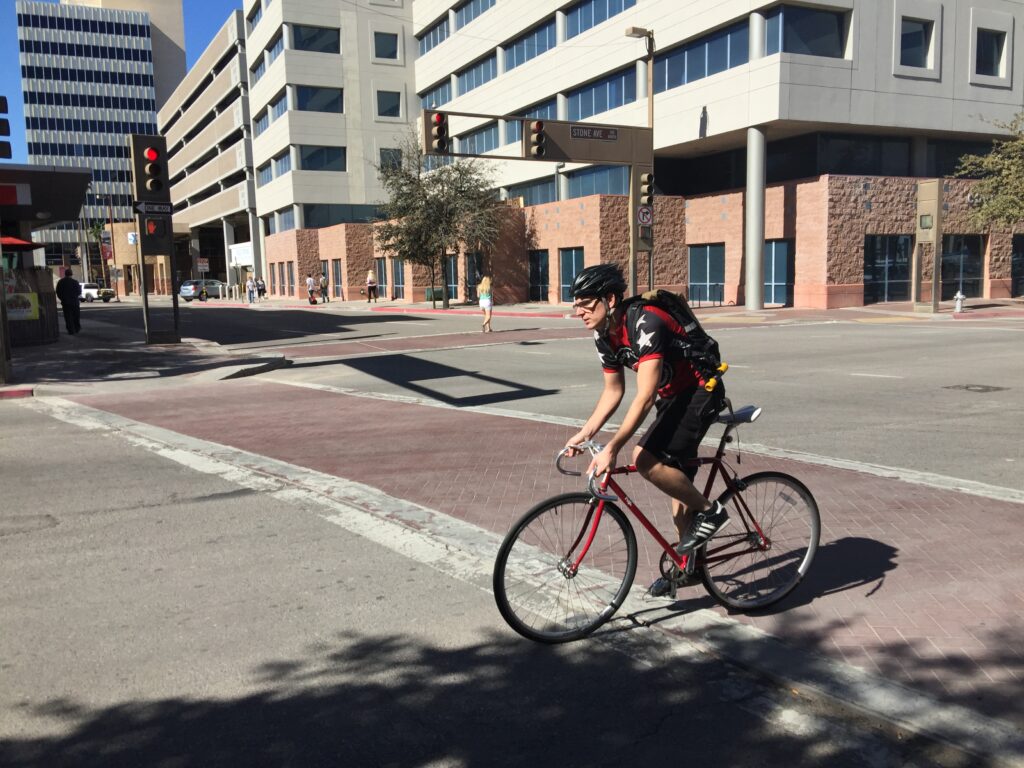
Summers in Tucson are not ideal cycling weather. Whether you are an experienced cyclist or just beginning your cycling journey, the summer heat will be a factor. Here are some tips on overcoming the challenges of Arizona heat on your daily commute.
Hydration
The key to summer cycling, or any summer exercise, is proper hydration. Not only do you need to hydrate during and after physical activity but making sure you are hydrating before mounting your bike is important.
“A good rule for hot-weather cycling is to drink small amounts consistently instead of waiting until you feel thirsty,” wrote Ron Johnson for Momentum Mag .
Even if you are not planning to ride that day, make sure you get enough water.
“Drink more water than usual, regardless of activity level,” noted the Pima County Beat the Heat website.
Poor hydration can lead to overheating and fatigue, so even on the shortest rides take water. Extra electrolytes or sports drinks can help with hydration, but avoid alcohol, caffeine and sugary drinks as they can cause you to lose body fluid.
Timing
Whenever possible try to cycle when it is cooler. That may be a relative term in the Tucson summer, but cycling in the early morning and evening helps to avoid peak temperatures.
“Riding during cooler parts of the day does more than improve comfort — it also lowers the risk of heat exhaustion and heat-related illnesses,” explained Johnson.
Another benefit of these timeframes is less cars on the road.
Preventing exposure to extreme temperatures is also a good strategy. Use a weather app to make sure there are no excessive heat warnings. The National Weather Service is a good resource.
Dress for Success
Wearing lightweight, breathable clothing can do a lot to keep you cooler. Tucson has a dry climate, so synthetic performance fabrics work well. They can wick away moisture from your body and are usually light enough to allow air flow.
Tight cycling shirts and shorts may help with performance but consider loose-fitting clothes. Also consider long sleeves to prevent direct sunlight or cycling apparel with UV protections.
Ditch the backpack. Backpack can trap heat and sweat on your back, so consider using side bags or baskets that attach to the bike itself.
Gimme a Break
Don’t push yourself and risk your health. Take a break at the outset of any heat related issues, especially if you feel dizzy, nauseous, weak or overheated. Find a shady spot or even go inside for some air conditioning.
No where to escape the sun? Take off your helmet, drink water and allow your body temperature to cool before getting back on the bike.
“Sometimes the smartest move is shortening the ride or finding alternate transportation home,” said Johnson.