
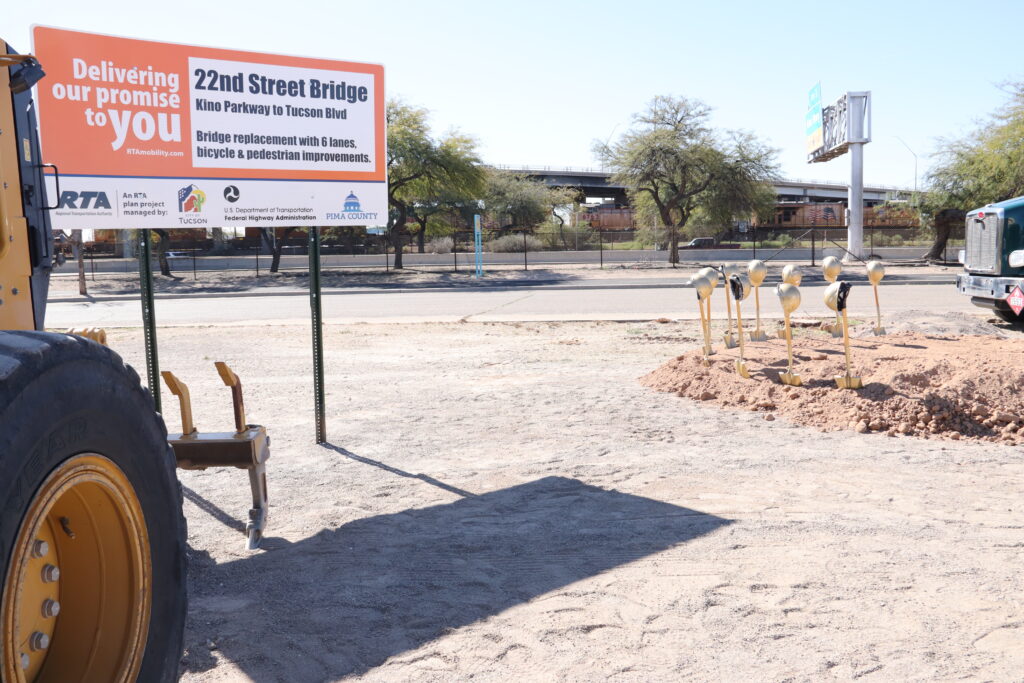
Elected leaders and officials from across the region were on hand last month to commemorate the groundbreaking for the 22nd Bridge project.
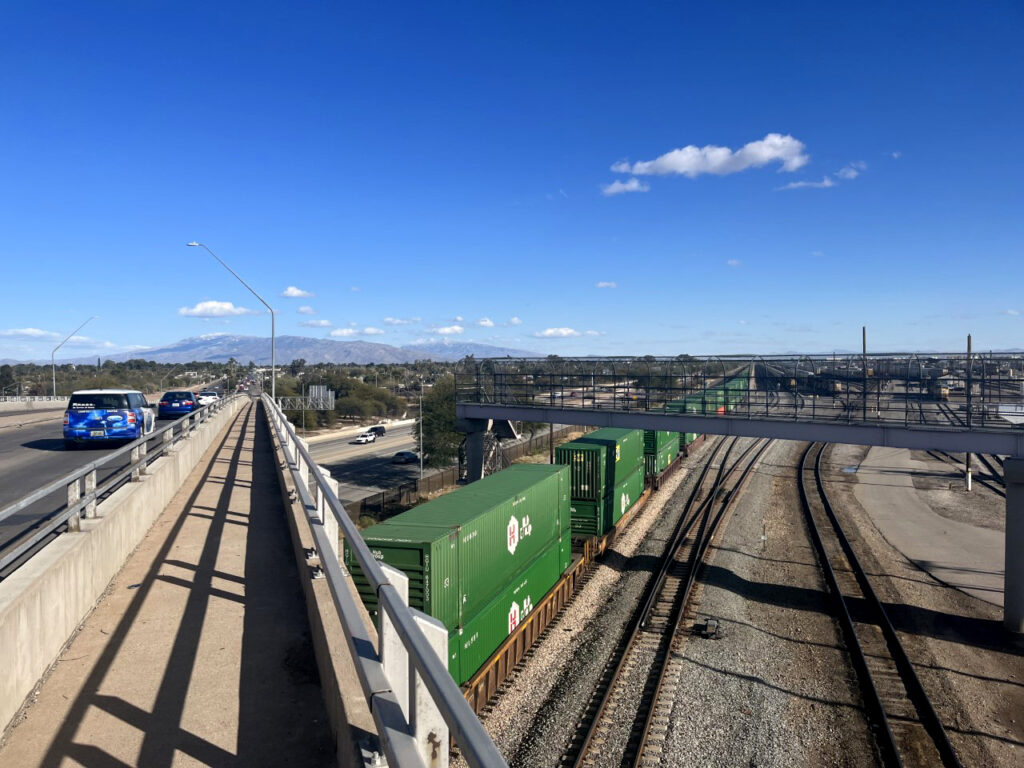
The 22nd Street bridge project will replace the old bridge with a new bridge on 22nd Street over the railroad tracks and Barraza-Aviation Parkway with greater weight capacity, additional travel lanes, and bicycle and pedestrian facilities.
“This project takes a 1960s era bridge and mindset and takes it into the 21st century as a thriving, sustainable, vibrant desert city,” Tucson Mayor and Regional Transportation Authority Board Member Regina Romero said at the groundbreaking event.
The project is part of the larger 22nd Street, I-10 to Tucson Boulevard/Barraza-Aviation Parkway, in the 2006 voter-approved RTA plan. The bridge portion of the project is budgeted for more than $150 million, which includes $90 million in federal grant funding, $44.4 million in RTA funds, $29.3 million in state HURF funding and $3.7 million from city of Tucson impact fees.
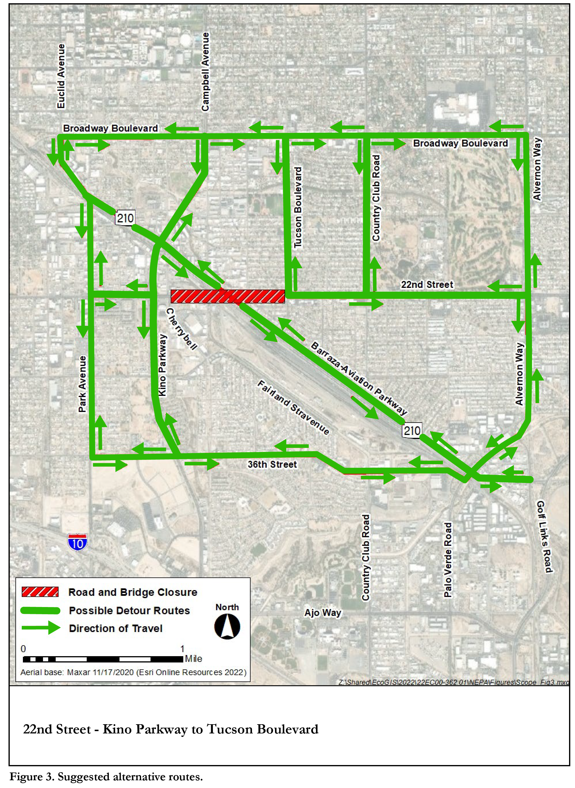
The demolition and reconstruction is expected to take two-and-a-half to three years to complete and requires the total closure of 22nd Street, between Tucson Boulevard and Cherrybell Stravenue. The lengthy closure is needed because of the complexity of the project.
“Not only does this involve tearing down and rebuilding a bridge, but it will be done above an active railroad line, a busy railyard and state highway. As if that’s not complicated enough, the rail line and highway both must remain open during construction,” said Rick Ellis, Pima Association of Governments Director of Transportation Services.
The bridge was built in 1966 and remains structurally safe but weight restrictions have been imposed for years to preserve the longevity of the bridge. Because of the restrictions, however, large freight-bearing and other heavy vehicles can’t use the bridge.
Ellis explained that the bridge has other limitations, primarily for non-automobile users.
“The current bridge has narrow sidewalks and no bicycle lanes. The new design takes into account the various modes of travel that are common today,” Ellis said.
Additional project information and a detour map is available at the project webpage https://dtmprojects.tucsonaz.gov/pages/22nd-street-bridge.