Traffic counts
Pima Association of Governments (PAG), along with some of its member jurisdictions, regularly collects traffic counts on major roads and intersections throughout the region. Traffic counts provide vital data for PAG’s transportation planning and travel forecasting. Others who use traffic count information include:
- Transportation engineers and planners throughout the region to identify existing traffic problems and solutions.
- The Arizona State Legislature and U.S. Congress to make decisions regarding the need for and allocation of state and federal funds.
- Regional, state and federal air quality experts to monitor traffic-related pollutants and conformance with air quality standards.
- Private sector marketing specialists to use as measures of accessibility and exposure.
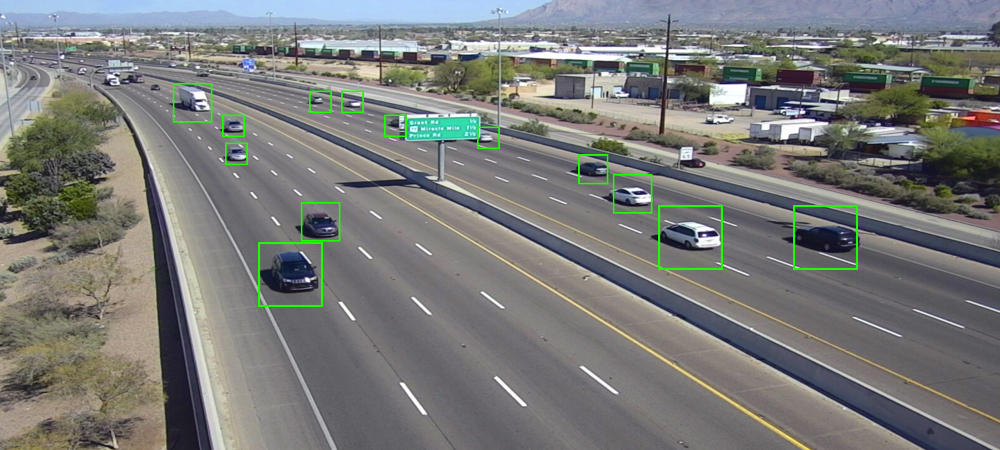
PAG annually collects and maintains traffic counts throughout eastern Pima County, typically using pneumatic tubes and video cameras and incorporating PAG member jurisdictions’ continuous count data on road segments and intersections.
Traffic count data collection improvement
PAG member jurisdictions use a variety of traffic sensors to collect traffic data throughout the region. To improve its traffic count program, PAG uses a comparative analysis method it developed in 2021 to integrate the regional traffic data into its traffic models, to provide guidelines to manage and maintain the data, and to validate regional modeling efforts.
Regional Traffic Performance Measure Development
Providing efficient and sustainable transportation services for the greater Tucson region is one of the crucial roles of Pima Association of Governments. This traffic performance study, which complies with federal requirements such as the FAST Act and supports the development of Transportation Systems Management and Operations (TSMO) strategies, investigated regional traffic data sources and developed data-driven performance measures using regional traffic sensors and connected-vehicle traffic data.
Regional Multimodal Traffic Performance Measure Development
PAG, using funds through the federal Carbon Reduction Program (CRP), develops and applies a data-driven framework for assessing transit and active transportation performance across the Tucson metropolitan area with the support from PAG member jurisdictions. This work builds on prior PAG efforts that primarily examined motorized vehicle traffic, extending the scope to include transit, micromobility and walking modes that are critical to achieving both accessibility and climate objectives.
For transit users, it evaluates various serviceability aspects, including speed and travel time, reliability and regularity, and headways and on-time performance. For pedestrians, this analytical framework evaluates pedestrian volumes, intersection delays, and pedestrian level of service (PLOS). Lastly, for micromobility service users, the framework evaluates utilization, availability, and geographic service coverage.